GET CONTRACTED
Edward@Croweandassociates.com
Call us: 1.203.796.5403
Crowe & AssociatesCrowe & Associates
  • Home
  • ABOUT
  • Sales Blog
  • Sales Tools
    • Online enrollment
      • Connect4Medicare
      • Sunfire
    • Quote and comparison site
    • Application Processing
    • Free Medicare lead program
    • Agent website
    • Predictive dialer
  • Free Leads
  • Products
    • Medicare Plans
    • Life Insurance Plans
    • Final Expense Insurance
    • Long Term Care Insurance
    • Fixed and Indexed Annuities
    • Healthshares
    • Dental and Vision Plans
    • Other Products
  • Training Webinars
  • Contact Us

Blog

Home Posts tagged "Medicare" (Page 4)
Medicare Advantage Plan Cost Breakdown

Medicare Advantage Plan Cost Breakdown

By Ed Crowe | General Articles | 0 comment | 3 April, 2025 | 0

Medicare Advantage (MA) plans are growing in popluarity as an alternative to Original Medicare, often attracting enrollees with low premiums, extra benefits, and all-in-one coverage. However, understanding the true Medicare Advantage Plan cost breakdown is crucial to avoid unexpected financial burdens. Here’s a detailed look at the key expenses associated with Medicare Advantage plans.

Premiums

Many MA plans advertise low or even zero-dollar premiums. However, enrollees must still pay the standard Medicare Part B premium ($185 per month in 2025) unless they qualify for financial assistance. Some plans may also charge an additional monthly amount for extra benefits, like dental comprehensive coverage.

Deductibles and Copays

Unlike Original Medicare, which has standardized costs, Medicare Advantage plans vary widely in deductibles and copay amounts. Enrollees of some MA plans must to meet an annual deductible before coverage kicks in, and they charge copays for doctor visits, hospital stays, and prescription drugs.

Out-of-Pocket Maximums

One advantage of MA plans is that they have an annual out-of-pocket maximum, unlike Original Medicare. In 2025, the maximum amount a MA plan CMS allows MA plans to charge for in-network services is $9,350. Please keep in mind, not all plans charge this amount for an out-of-pocket maximum; most plans have lower MOOPs. This is the most they are allowed to charge, the amount varies greatly by plan. Once this limit is reached, the plan covers all additional costs for the remainder of the year.

Out-of-Network Care

Most MA plans operate within a provider network. HMO plans require enrollees to use only in-network providers, while PPO plans allow some out-of-network visits at a higher rate. Please note; unless you are in a emergency situation, seeking care outside the network can lead to significant additional expenses.

Prescription Drug Costs

Many Medicare Advantage plans include Part D prescription drug coverage. The cost for prescrptions vary based on the plan’s formulary. Factors such as tiered formulary pricing and preferred pharmacy networks can influence out-of-pocket expenses for medications. Most plans also have a prescription deductible to meet for medications over a specific tier level.

Hospitalization and Specialist Care

While MA plans cover hospital and specialist care, costs can add up quickly. Some plans charge daily copays for hospital stays. Additionally, specialist visits usually have higher copays than PCP visits or require referrals, adding another charge.

Extra Benefits and Hidden Costs

Medicare Advantage plans often include extra benefits like dental, vision, and hearing coverage. However, these benefits may have limitations, such as caps on coverage or a restricted provider network, which can lead to unexpected out-of-pocket expenses.

Travel and Emergency Care Costs

Unlike Original Medicare, which offers nationwide coverage, most MA plans have geographic restrictions. If you travel frequently, you may face higher costs for out-of-network emergency care or require a plan with national coverage options.

Agents see how easy it is to compare MA plans with Sunfire and Connecture

Medicare Advantage plans can be a cost-effective option for some enrollees, but it’s essential to understand the full financial picture. By carefully reviewing plan details, including premiums, out-of-pocket limits, network restrictions, and prescription drug costs, enrollees can make informed decisions about healthcare coverage and avoid expensive surprises.

Need a scope; click here

Medicare SEP Changes 2025

Medicare SEP Changes 2025

By Ed Crowe | General Articles | 0 comment | 10 March, 2025 | 0

There have been some important Medicare SEP changes in 2025 that both agents and enrollees need to be aware of. These regulations were put into effect by the CMS. We will explain those changes and how to navigate them. We’ve summarized the changes and how they could impact your clients.

SEPs for D-SNPs & LIS enrollees

As of January 1, 2025 CMS eliminated the quarterly SEP that let dual eligible individuals or those with LIS make MA/MAPD Medicare Advantage plan changes once each quarter during the first 3 quarters.

What replaced the quarterly SEP for D-SNP & LIS enrollees

Instead of a quarterly SEP, CMS has provided a monthly SEP (Code DEP). This allows DSNP and LIS beneficiaries to disenroll from their MAPD plan and enroll in Original Medicare and a standalone PDP. The SEP also allows LIS members to switch their current PDP coverage to another PDP plan.

There is also a monthly integrated SEP (INT-SEP). This SEP allows only full dual eligible beneficiaries to switch to or from one integrated D-SNP with aligned Medicaid plan to another.

Monthly INT SEP details

Full Dual Beneficiaries can use the INT-SEP once per month. The effective date of the new plan will be the first day of the following month.

Plans that are eligible for the INT-SEP include:

  • FIDE SNP: Fully Integrated Dual Eligible Special Needs Plan
  • HIDE SNP: Highly Integrated Dual Eligible Special Needs Plan
  • AIP: D-SNP is an Applicable Integrated Plan 

Although dual eligible plan enrollees can change plans monthly, staying in their current plan allows them to avoid disruptions to their coordinated care plan.

Disaster (DST) SEPs

CMS has also changed the SEP (DST-SEP). The DST SEP is for those affected by an event that results in a government declared disaster or other emergency. The election process will change as of April 1, 2025.

Medicare beneficiaries who miss a valid election period due to a government declared disaster or emergency must follow these guide lines:

Beneficiaries who qualify for the DST SEP must submit applications directly through CMS by calling 1-800-MEDICARE or TTY 1-877-486-2048 to submit an application.

In other words, CMS will not accept broker assisted DST applications.

Despite the changes to these SEPs, full and partial dual eligible beneficiaries can continue to use other SEPs, if they are eligible (AEP, OEP, move, loss/gain of eligibility, etc.).

CT MSP Income Limits 2025

CT MSP Income Limits 2025

By Ed Crowe | General Articles | 0 comment | 6 March, 2025 | 0

Residents of CT and Medicare agents who offer plans in CT need to be aware of the changes to the CT MSP income limits 2025. The MSP program provides assistance to beneficiaries with limited incomes to help cover their medical costs. Understanding the CT MSP income limits is extremely important for anyone on Medicare and has a limited income. Especially if they depend on financial assistance to access needed healthcare.

What is MSP (Medicare Savings Program)

MSP stands for The Medicare Savings Program. Each state administers this program and provides assistance with medical costs for individuals on Medicare with limited income and resources. It helps pay Medicare premiums, deductibles, coinsurance, and copays.

To participate in the program, you must be eligible for Medicare Part A (hospital insurance) and meet income and asset criteria. In the state of CT, DSS administers the Medicare Savings Program.

CT MSP Income Limits 2025

The MSP in CT provides 3 different levels of help. Each level has a separate income limit that qualifies beneficiaries. Please note; the income limit is adjusted based on household size.

The 2025 income limits for each level of MSP are listed below:

Qualified Medicare Beneficiary (QMB)

Those who qualify for the QMB level recieve the highest level of help.  Individuals who qualify for this program, have income of up to 100% of the FPL (Federal Poverty Level).  The QMB program pays the Part B Medicare premium, deductibles, coinsurance, and copays.

Individuals with a monthly income of $2,752 for an individual and $3,719 for a couple qualify as QMBs.

Learn about medicare Extra Help

Specified Low-Income Medicare Beneficiary (SLMB)

The SLMB level pays for the Medicare Part B premiums and does not cover deductibles or coinsurnae payments.

Individuals who have an income level of $3,013 per month for an individual or $4,072 a month for a couple. In other words, individuals must have an income level between 100% and 120% of the FPL.

Additional Low-Income Medicare Beneficiary (ALMB)

The ALMB is similar to the SLMB program; it pays the Medicare Part B premium only. It does not cover deductibles or coinsurance payments. It is availabel to those who have income between 120% and 135% of the FPL.

To qualify for this level of help; indivduals must have monthly income of $3,209 for single or $4,336 for a couple.

Please note: This program is subject to available funds and is issued on a first come first served basis

How to Apply for CT MSP

Those who want to apply for CT’s MSP program can do so through the Department of Social Services (DSS).

Individuals must complete a CT state (W-1QMB) application form. There are a few different ways to complete and return the form;  online, through the mail, or in-person at a local DSS Regional Office.  

Beneficiaries must provide information such as: Medicare enrollment status, income, assets, and other relevant information. DSS provides help with the application for anyone who needs it. Beneficiaries can also have an authorized person complete the application if needed.

Click here for a list of local DSS offices.

To apply online, visit www.connect.ct.gov, click on the ‘Apply for Benefits’ tab and apply as directed.

Those who wish to apply for MSP only; download and complete application below:

Medicare Savings Program Application (W-1QMB)

Formulario de Renovación de programas de ahorro de Medicare (W-1QMBS)

To apply for other assitance programs as well as the MSP program: SNAP (food stamps), Medicaid for Employees with Disabilities (MED-Connect), Medicaid for the Aged/Blind/Disabled (HUSKY C), and/or cash assistance, download the application below.

Click here to apply for Husky C and or Cash assistance program benefits

Haga clic aqui para Husky o asistencia en efective CW-1ES Solicitud de Beneficios

The CT MSP program provides an essential service to qualified individuals. It provides financial assistance to cover Medicare costs.

Agents who want to be part of the team at Crowe – click here for onine contract

Watch a YouTube video and learn about changes for Dual, Partial Dual and LIS SEP changes

For additional information on how to apply, please visit www.ct.gov/dss/apply.

Why Offer Physicians Mutual Dental Plans

Why Offer Physicians Mutual Dental Plans

By Ed Crowe | General Articles | 0 comment | 26 February, 2025 | 0

Because Medicare agents have a large number of products to choose from when deciding what to sell, we explain why offer Physicians Mutual dental plans in the post below.

Dental products provide necessary coverage not offered by original Medicare. Because poor dental health can lead to serious health issues, regular dental checkups can help avoid health problems down the road.

There are 4 different dental plan options

Each plan provides coverage for over 400 procedures. The difference between the plans is the premium and the amount the plan pays for each covered service. There are plan choices to fit any budget.

All plans provide 100% coverage for preventive treatment at an in-network dentist. This includes; an exam, x-rays and a cleaning.

Take a look at the CT dental Brochure

Please note; There is a 12 month waiting period on major benefits.

All plans use the Ameritas network of providers. There are more than 5000,000 provider locations for member to access. All these plans are PPOs so members can receive out of network coverage for services, but it is always better to use in network providers for the best value.

Economy

As you have probably guessed; these plans are the lowest cost plans.

The Economy plans pay 25% of the maximum allowable charge for Basic treatments (fillings) and Major benefits, such as root canals or crowns.

Standard

Standard plans are another affordable option for dental coverage. They provide a payment of 40% of the maximum allowable charge for basic and major treatments.

Preferred

Preferred plans are similar to the other plans. The plan cost is a little more and so is the coverage percentage members receive. These plans provide 55% payment of the maximum allowable charges for basic and major benefits.

Premier

The Premier plans are the highest coverage level available at Physicans Mutual. This plan pays 70% of the maximum allowable charge for covered services..

Click here for product availability Map

A few more reasons to offer Physicians Mutual Dental Plans

These plans do not require members to pay a deductible. All preventative benefits are covered at 100% from day 1. One important aspect of this plan is; there is no maximum on cash benefits like other plans. That makes these plans a fantastic value no matter which plan beneficiaries choose.

Watch a video on the Physicians Mutual Dental plans

It is easy for members to add a vision and hearing rider to any plan. Once added members can use any participating provider.

See why you should offer ancillary products to your clients

Eye exams are covered up to $100 per year per member. The vision correction benefit of $150 includes prescription eyeglasses, sunglasses, sports glasses and contact lenses. There is a 3 month waiting period for this benefit. Members use the VSP network of providers to receive a discounted price for eye exams and lenses.

The hearing benefit provides up to $75 per member for covered hearing exams and as much as $500 per hearing aid per ear after a 12 month waiting period.

Click here for online contracting with Crowe

Understanding common Medicare acronyms

Understanding Common Medicare Acronyms

By Ed Crowe | General Articles | 0 comment | 25 February, 2025 | 0

Understanding common Medicare acronyms is important weather you are getting ready to sign up for Medicare or a Medicare agent. As in any business, understanding the terminology is essential to help navigate the system.

General Medicare Terms

  • CMS: Centers for Medicare & Medicaid Services
    The federal agency that administers the nation’s major healthcare programs, including Medicare and Medicaid.
  • SSA: Social Security Administration
    The government agency responsible for administering Social Security benefits, including the processing of Medicare applications.

Parts of Medicare

  1. Part A: Hospital insurance covers inpatient hospital stays, skilled nursing facility care, hospice care and some home health services.
  2. Part B: Medical Insurance covers outpatient care, doctor services, preventative care and DME.
  3. Part C: Medicare Advantage plans are an alternative to Original Medicare. They provide the same coverage as Original Medicare and often some added benefits. Private insurance companies offer these plans.
  4. Part D: Prescription Drug Plans provide coverage for approved prescription medications. Private insurers offer these plans.

Medicare Plan Types

  • MA: Medicare Advantage also called Part C provide the same benefits as Original Medicare (Part A & Part B).
  • MAPD: Medicare Advantage Prescription Drug Plan provide the benefits of Original Medicare as well Part D.
  • PDP: Prescription Drug Plan provides stand alone coverage of prescription drugs under Medicare Part D.
  • HMO: Health Maintenance Organization is a type of Medicare Advantage plan. These plans require members to use a specific network of providers and referrals for specialists.
  • PPO: Preferred Provider Organization is a type of Medicare advantage plan that offers out of network coverage. They are a more flexible option than an HMO.
  • PFFS: Private Fee-For-Service is another type of Medicare advantage plan. It allows beneficiaries to see any doctor or hospital that accepts the plan’s terms. The costs and coverage are set by the plan.
  • MSA: Medical Savings Account combines a high-deductible Medicare advantage plan and a savings account. The plan deposits money into the account each year to pay healthcare expenses before beneficiaries meet the deductible amount.

Enrollment Periods

  • AEP: Annual Enrollment Period occurs from October 15 to December 7 annually. During this time, beneficiaries can enroll in or change their Medicare coverage.
  • ICEP: Initial Coverage Election Period is the period when individuals first become eligible for Medicare benefits.
  • SEP: Special Enrollment Period occurs outside normal enrollment periods and provides an opportunity to change plans due to a specific event. This includes things like moving or losing employer sponsored health coverage.

Learn more about Medicare enrollment periods

Notices and Forms

  • ANOC: Annual Notice of Change
    A document sent by Medicare plans outlining any changes in coverage, costs, or service areas for the upcoming year.
  • EOC: Evidence of Coverage
    A document detailing what the plan covers, how much members pay, and other rights and responsibilities.
  • ABN: Advance Beneficiary Notice of Noncoverage
    Is a waiver of liability. A notice given to beneficiaries of Original Medicare when a service or item isn’t expected to be covered, allowing them to decide whether to receive and pay for the service.

Assistance Programs

  • LIS: Low-Income Subsidy
    Also known as “Extra Help,” this program assists individuals with limited income in paying for prescription drug costs under Part D.
  • MSP: Medicare Savings Program
    State programs that help pay Medicare premiums and, in some cases, deductibles and coinsurance for individuals with limited income.

A few more terms

  • DME: Durable Medical Equipment
    Medical equipment like wheelchairs, walkers, or hospital beds that are ordered by a doctor for use in the home.
  • EOB: Explanation of Benefits
    A statement from a Medicare plan detailing what was billed, what Medicare paid, and what the beneficiary may owe.
  • HIPAA: Health Insurance Portability and Accountability Act
    A federal law that, among other things, protects the privacy of individuals’ health information.

Being well informed helps ensure that beneficiaries and professionals can navigate the Medicare system effectively.

How to Request a Tier Exception

How to Request a Tier Exception

By Ed Crowe | General Articles | 0 comment | 18 February, 2025 | 0

At some point, some individuals with prescription coverage may find their prescription drug copay higher than expected. This could mean, the drugs are on a higher tier and therefore the copay is more. Higher tiered drugs are more expensive than lower tiered drugs. Although this can make out-of-pocket expenses significantly greater than expected, beneficiaries can request a tier exception. This may help lower the copay for the medication. In this post, we discuss how to request a tier exception.

What is a tier exception

A tier exception is a formal request individuals send to their insurance provider asking them to cover a drug at a lower cost tier. Typically, each insurance plan has a formulary (list of covered drugs) where they categorize medications into different tiers. Generic drugs are in the lowest-cost tiers and specialty or brand-name drugs in the highest-cost tiers. Individuals who have medication on a high-cost tier and cannot afford their copay can request an exception to lower their costs.

Review the formulary

Individuals should check their insurance provider’s formulary, which is the list of covered medications and their respective tiers. This cost for drugs on each tier is available in the plan’s evidence of coverage. Enrollees can also request a plan formulary from the plan provider or review it on the plan’s website. If the drug is on a high-cost tier, check and see if there are lower-tier alternatives that might work. If that is not an option, a tier exception may provide a way to afford the necessary medication.

Learn about Medicare Part D 2025

Obtain a supporting statement from the doctor

The enrollee’s insurance company will require a supporting statement from the prescribing doctor explaining why lower-tier alternatives are not suitable for the individual. The doctor must specify that:

  • The lower-tier medications have been ineffective or would cause adverse effects.
  • The requested drug is necessary to treat the specific condition.

Submit a formal request to the insurance carrier

Contact the insurance company to obtain the tier exception request form. The doctor’s office may be able to do this for the patient. Complete the form, attach the supporting statement, and submit it through the insurance company’s designated method (fax, email, mail, or online portal).

Wait for a decision

In the majority of cases, insurance carriers have 72 hours to make a decision on a standard request. If the situation is urgent and the medication is needed immediately, request an expedited review, which requires a response within 24 hours.

If the request is approved

The drug will be covered at a lower cost sharing amount that applies to the new drug tier. In most cases, the approval will last until the end of the calendar year. Beneficiaries may request the drug tier be honored the following year. In the event the carrier does not allow the exception the following year, the plan enrollee can start the process over again or use the Medicare AEP to find a plan that covers the drug at a lower rate.

If the request is denied

If the tier exception request is denied, beneficiaries have the right to appeal the decision. Each plan will provide instructions on how to appeal, which often includes submitting additional medical documentation. If the appeal is still denied, the beneficiary can escalate it to an independent review entity.

Watch a quick YouTube video on Medicare enrollment periods

Requesting a tier exception can help make prescription medications more affordable, but it may require careful documentation and persistence. Those facing high medication costs must work closely with their doctors and insurance carrier to improve their chances of approval.

Understanding Prescription Drug Tiers

Understanding Prescription Drug Tiers

By Ed Crowe | General Articles | 0 comment | 11 February, 2025 | 0

When you discuss Medicare prescription coverage with clients, understanding prescription drug tiers is imperative. Medicare Part D or Medicare Advantage plans place each drug into a specific tier. These tiers impact how much enrollees pay out of pocket for prescriptions. When clients know the tiers their medications are on, they can make informed choices and potentially save money.

What are prescription drug tiers

Prescription drug tiers are cost levels assigned to different medications within a plan’s formulary (the list of drugs each plan covers). Generally, lower-tier drugs cost less, while higher-tier drugs have higher copays or coinsurance.

Prescription drug tiers

Most Medicare Part D and Medicare Advantage drug plans use a 5-tier system, but some may vary slightly. Here’s a general breakdown:

Tier 1 – Preferred Generic Drugs

  • Least expensive tier
  • Includes common, low-cost generic drugs
  • Lowest copay

Tier 2 – Non-Preferred Generic Drugs

  • Slightly more expensive than Tier 1 drugs
  • Includes common, low-cost generic drugs
  • Higher copay than Tier 1

Tier 3 – Preferred Brand -Name Drugs

  • Brand-name drugs that the insurance company has negotiated lower prices for
  • Higher copay or coinsurance than generic drugs

Tier 4 – Non-Preferred Brand-Name Drugs

  • Higher-cost brand-name drugs
  • May require prior authorization or step therapy
  • Higher copay or coinsurance than lower tiers

Tier 5 – Specialty Drugs

  • Highest cost medications, often for complex or chronic conditions
  • Typically require prior authorization
  • Coinsurance instead of a set copay. In other words, beneficiaries pay a percentage of the drug cost.

In some cases, the necessary drug is not on the plan’s formulary. In that case, the beneficiary needs to request a formulary exception.

Use drug tiers to your advantage

Check the plan formulary – Every Medicare Part D or Medicare Advantage drug plan has a unique formulary. Look up medications to see which tier they fall into to see which plan is the best option.

Consider generic alternatives – Beneficiaries should ask their doctor or pharmacist if a Tier 1 or Tier 2 generic is available instead of a higher-tier brand-name drug.

Use preferred pharmacies – Many plans offer lower prices when beneficiaries fill prescriptions at “preferred” network pharmacies.

Look into tier exceptions – If a prescribed drug is in a high-cost tier, beneficiaries can request a tier exception from their plan, which may reduce their cost.

Compare plans during open enrollment – Each year, Medicare beneficiaries can review and switch plans during the Annual Enrollment Period (AEP) from October 15 to December 7 to find a plan that better suits their prescription needs.

    Prescription drug tiers can significantly impact medication costs, but understanding how they work allows beneficiaries to make cost-effective choices. Always review the plan’s formulary, consider generics, and explore savings options like tier exceptions or different pharmacies. A licensed Medicare agent can help navigate drug coverage costs and plan options.

    How to Appeal an IRMAA

    How to Appeal an IRMAA

    By Ed Crowe | General Articles | 0 comment | 9 February, 2025 | 0

    If you’re a Medicare beneficiary with higher income, you may be subject to the Income-Related Monthly Adjustment Amount (IRMAA) for your Medicare Part B and Part D premiums. However, if your income has recently decreased due to qualifying life events, you may be eligible to appeal the IRMAA determination. Here’s what you need to know about how to appeal an IRMAA.

    What is an IRMAA

    The Medicare Income-Related Monthly Adjustment Amount (IRMAA) is an extra charge added to Medicare Part B and Part D premiums if the beneficiary’s income exceeds certain thresholds. The Social Security Administration (SSA) determines IRMAAs based on the tax return from two years prior. In other words, a 2025 IRMAA is based on 2023 income.

    IRMAA brackets 2025

    When you can appeal an IRMAA

    Medicare beneficiaries may appeal an IRMAA redetermination if they experience a significant life-changing event that cause a reduction in income. Qualifying events include:

    1. Marriage, divorce, or annulment
    2. Death of a spouse
    3. Retirement or reduction of working hours
    4. Loss of a pension or settlement of an employers pension plan
    5. Loss of income-producing property due to a disaster or other circumstance

    Any of these situations may cause a decrease in income. This provides grounds for an appeal.

    How to File an IRMAA Appeal

    To file an appeal, beneficiaries must complete Form SSA-44, Medicare Income-Related Monthly Adjustment Amount – Life-Changing Event. Here’s how to do it:

    1. Download the Form – Obtain Form SSA-44 from the Social Security website or by at the local Social Security office.
    2. Complete the Form – Provide details about the life-changing event, including supporting documentation (such as a marriage certificate, employer statements, or tax returns).
    3. Submit the Form – Either mail or deliver the completed form and supporting documents to the local Social Security office.
    4. Await a Decision – SSA will review the request and notify the beneficiary of the outcome. If they deny the appeal, the beneficiary may request a further review.

    To Sum it up

    If your income changes due to a qualifying event, don’t hesitate to appeal an IRMAA determination. Many beneficiaries successfully lower their Medicare premiums through this process. Be sure to gather all necessary documentation and submit the appeal as soon as possible to avoid overpaying.

    For more details, visit the official Social Security Administration website or contact your local SSA office.

    Medicare Supplement Commissions 2025

    Medicare Supplement Commissions 2025

    By Ed Crowe | General Articles | 0 comment | 9 February, 2025 | 0

    Medicare Supplement (Medigap) insurance is one of many great products for Medicare agents to offer their clients. They continue to provide a good source of income to agents with their stable commission structure and renewal income. The Medicare Supplement commissions 2025 remain the same as they have been in prior years. We will explain what to expect regarding payment of these commissions below.

    How Medicare Supplement Commissions Work

    Medigap commissions are structured differently than Medicare Advantage (MA) or Part D plans. Instead of receiving a one-time upfront payment, Medigap agents typically earn level commissions over multiple years. Here’s an overview of the commission structure:

    1. Initial Year Commission – Agents earn a commission based on a percentage of the first-year premium, typically between 20 and 22%.
    2. Renewal Commissions – In most cases, Medigap policies pay renewal commissions for a period of 6 years.
    3. Varying Payouts by State – Some states and carriers impose limits on commission percentages, affecting how much agents can earn.

    How Agents Receive Medicare Supplement Commissions

    Agents typically receive their commissions through one of the following methods:

    Direct Deposit – Most carriers pay commissions electronically on a monthly or biweekly basis.

    Advanced Commissions – Some insurers offer advance payments of commissions (e.g., 9 or 12 months upfront) based on projected renewals.

    As-Earned Commissions – Commissions are paid out as the policyholder pays their premium.

    General Payment Structure

    A typical Medigap commission structure follows this breakdown:

    First-Year Commission: about 21% – 22% of the annual premium

    Renewal Commission (Years 2-6): percentage rates vary by area and carrier.

    Payment Frequency: Monthly, biweekly, or advanced lump sums based on carrier agreements

    Learn more about commission payment structures

    Factors That Influence Commission Rates

    Several factors determine how much an agent earns from selling a Medigap policy. These factors include; carrier-specific rates; each carrier sets its own commission structure (unlike PDP & MA/MAPD plans). Each state has its own regulations; some have specific commission caps (CA & FL). In other instances, commission rates are based on age of enrollee and plan type.

    Medicare Supplement vs. Medicare Advantage Commissions

    Medicare Supplement commissions are generally lower in the first year compared to Medicare Advantage, but the long-term renewal structure and coverage type make them more sustainable. Medigap policies also tend to have lower attrition rates, meaning agents can build a long-term residual income.

    Click here to watch a YouTube video on MA & PDP commissions 2025

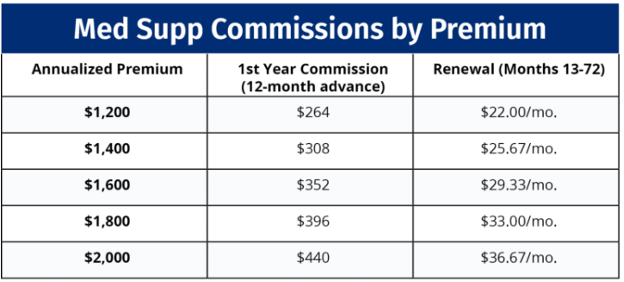
    Example using 22% commission and 12-month advance:

    For agents selling Medicare Supplement plans, commissions remain a steady and reliable income source. While initial-year payouts may be lower than Medicare Advantage, the ongoing renewal structure provides financial stability.

    Join the team at Crowe- click here for online contract

    Please note: These payment amounts vary by carrier and product. Not all carriers pay 22% for enrollments. This amount varies quite a bit. Be sure you check each carrier’s rate in the specific area you plan to market the plans in.

    What is the Medicare GEP

    What is the Medicare GEP

    By Ed Crowe | General Articles | 0 comment | 6 February, 2025 | 0

    To answer the question; what is the Medicare GEP; The Medicare GEP is an opportunity for individuals who missed their initial chance to sign up for Medicare Part A and/or Part B to enroll. It runs from January 1 to March 31 each year. This allows eligible individuals to enroll in Medicare coverage, though late penalties may apply.

    Who needs the GEP

    The GEP is for individuals who did not sign up for Medicare during their IEP (Initial Enrollment Period) and do not qualify for an SEP (Special Enrollment Period).

    When does coverage begin

    As of 2023, individuals who enroll in Medicare during the GEP will have their coverage begin the month after they enroll. Prior to 2023, coverage did not begin until July 1, which led to significant delays in accessing benefits.

    Late enrollment penalties

    Individuals who sign up during the GEP may have to pay an LEP (late enrollment penalty). This can increase monthly Medicare costs:

    Part A penalty

    For those who must pay a premium for Part A, the monthly premium could increase by 10%. This will be in place for twice the number of years they were eligible but didn’t sign up.

    Part B Penalty

    The monthly Part B premium will increase by 10% for each full 12-month period the beneficiary was eligible but didn’t enroll. This penalty is permanent and remains in place for as long as they have Part B.

    Medicare Advantage, Part D and Supplement enrollment

    If an individual enrolls in Medicare during the GEP, they can sign up for a Medicare Advantage (Part C) or a Medicare Part D prescription drug plan at this time. Coverage for these plans begins on the month following the enrollment. Although late enrollment in Part D or Medicare Advantage plans that include prescription drug coverage may include a lifelong penalty.

    Medicare supplements can be a little more difficult to get after the individual’s Medigap open enrollment has passed. When this is the case, some states require enrollees to undergo underwriting which can lead to denial or higher premiums.

    Avoiding the need for the GEP

    Beneficiaries can avoid using the GEP (General Enrollment Period) and getting potential LEPs:

    Sign up for Medicare during the Initial Enrollment Period, which starts three months before the 65th birthday and ends three months after.

    Those who have employer-sponsored coverage should confirm whether they qualify for a Special Enrollment Period (SEP) when that coverage ends. If they do, be sure to enroll before the SEP ends.

    The Medicare GEP is an important opportunity for those who miss their initial chance to enroll in Medicare. However, because of potential late penalties and delays in coverage, it’s best to sign up during the Initial Enrollment Period or a Special Enrollment Period when possible. Understanding enrollment deadlines helps ensure that beneficiaries get the healthcare coverage they need and avoid unnecessary costs.

    23456

    Categories

    • Ancillary Health product sales
    • Annuities
    • annuity
    • Brokers
    • CD rates
    • Dental
    • Dental insurance
    • Disability
    • FDIC insured CDs
    • Fixed interest rates
    • General Articles
    • Group Health Insurance
    • Individual Health Insurance
    • Investments
    • Latest news
    • Life Insurance
    • Life Insurance Products
    • Long Term Care
    • Medicare
    • Medicare A and B benefits
    • Medicare Advantage Plans
    • Medicare compliance
    • Medicare Drug Coverage
    • Medicare Supplements
    • Over The Counter benefits
    • phone and home Medicare sales
    • Retirement Income
    • Voluntary Benefits

    Recent Comments

    • JudyGardner on Humana over the counter catalog
    • Lena Paradis on Wellcare Spendables Card 2026
    • Priscilla Sharp on UnitedHealthcare UCard Benefits 2026
    • John Matzel on Humana OTC catalog 2024
    • Di on UnitedHealthcare UCard Benefits 2026

    Social Icons

    Archives

    • April 2026
    • March 2026
    • February 2026
    • January 2026
    • December 2025
    • November 2025
    • October 2025
    • September 2025
    • August 2025
    • July 2025
    • June 2025
    • May 2025
    • April 2025
    • March 2025
    • February 2025
    • January 2025
    • December 2024
    • November 2024
    • October 2024
    • August 2024
    • July 2024
    • June 2024
    • May 2024
    • April 2024
    • March 2024
    • February 2024
    • January 2024
    • December 2023
    • November 2023
    • October 2023
    • September 2023
    • August 2023
    • July 2023
    • June 2023
    • May 2023
    • April 2023
    • March 2023
    • February 2023
    • January 2023
    • December 2022
    • October 2022
    • September 2022
    • August 2022
    • July 2022
    • June 2022
    • February 2022
    • December 2021
    • October 2021
    • February 2021
    • January 2021
    • February 2020
    • January 2020
    • October 2019
    • July 2019
    • June 2019
    • May 2019
    • April 2019
    • March 2019
    • February 2019
    • January 2019
    • October 2018
    • September 2018
    • August 2018
    • July 2018
    • April 2018
    • March 2018
    • February 2018
    • January 2018
    • December 2017
    • November 2017
    • September 2017
    • August 2017
    • July 2017
    • June 2017
    • May 2017
    • April 2017
    • March 2017
    • February 2017
    • January 2017
    • December 2016
    • July 2016
    • June 2016
    • May 2016
    • April 2016
    • March 2016
    • February 2016
    • January 2016
    • September 2015
    • August 2015
    • July 2015
    • June 2015
    • May 2015
    • March 2015
    • February 2015
    • September 2014
    • August 2014
    • May 2014
    • April 2014
    • March 2014
    • February 2014
    • January 2014
    • September 2013
    • August 2013
    • July 2013
    • June 2013
    • May 2013
    • April 2013
    • March 2013
    • February 2013
    • January 2013
    • December 2012
    • November 2012
    • October 2012
    • September 2012
    • August 2012
    • July 2012
    • June 2012
    • May 2012
    • April 2012
    • March 2012
    • February 2012
    • July 2011
    • June 2011
    • August 2010
    • April 2010
    • September 2009
    • August 2009

    Recent Posts

    • Alignment 5 Star Medicare Plans
      29 April, 2026
      0

      Alignment 5 Star Medicare Plans

    • Medicare and VA benefits
      27 March, 2026
      0

      Veterans Benefits And Medicare Coverage

    • HealthFirst Plan Benefits 2026
      19 March, 2026
      0

      HealthFirst Plan Benefits 2026

    • Solis Medicare Advantage Plans
      2 March, 2026
      0

      Solis Medicare Advantage Plans

    With licensed sales professionals in both the investment and insurance fields, the experienced and knowledgeable team at Crowe & Associates can tend to your various needs.

    Latest News

    • Alignment 5 Star Medicare Plans

      Alignment 5 Star Medicare Plans

      Alignment 5 Star Medicare Plans Alignment Health’s 5-Star Medicare Advantage plans are

      29 April, 2026

    For agent use only.

    We do not offer every plan available in your area. Any information we provide is limited to those plans we do offer in your area. Please contact Medicare.gov or 1-800 MEDICARE to get information on all options.

    Not affiliated with the U. S. government or federal Medicare program. This website is designed to provide general information on Insurance products, including Annuities. It is not, however, intended to provide specific legal or tax advice and cannot be used to avoid tax penalties or to promote, market, or recommend any tax plan or arrangement. Please note that [Agency Name], its affiliated companies, and their representatives and employees do not give legal or tax advice. Encourage your clients to consult their tax advisor or attorney.

    Follow Us

    • Follow Us on LinkedIn
    • Find Us on Facebook
    • Watch Us on YouTube

    Subscribe to our newsletter

    Edward K. Crowe & Associates LLC BBB Business Review
    • Home
    • About
    • Agents
    • Quote
    • Retirement
    • Services
    • Blog
    • Contact
    • Privacy Policy
    Copyright 2026 Crowe & Associates | All Rights Reserved |

    Insurance Agency Website by Stratosphere

    • Home
    • ABOUT
    • Sales Blog
    • Sales Tools
      • Online enrollment
        • Connect4Medicare
        • Sunfire
      • Quote and comparison site
      • Application Processing
      • Free Medicare lead program
      • Agent website
      • Predictive dialer
    • Free Leads
    • Products
      • Medicare Plans
      • Life Insurance Plans
      • Final Expense Insurance
      • Long Term Care Insurance
      • Fixed and Indexed Annuities
      • Healthshares
      • Dental and Vision Plans
      • Other Products
    • Training Webinars
    • Contact Us
    Crowe & AssociatesCrowe & Associates

    Online Enrollment- Enroll prospects online without the need for a face to face appointment. Access to all major carriers with the ability to compare plan benefits and prescription drug costs. Link to recorded webinar https://attendee.gotowebinar.com/recording/2899290519088332033

    All agents receive a personalized enrollment website. Prospects can use the site to compare plans, check doctors, run drug comparisons and enroll in plans. Agents are credited for all enrollments. Click Here

    Error: Contact form not found.