GET CONTRACTED
Edward@Croweandassociates.com
Call us: 1.203.796.5403
Crowe & AssociatesCrowe & Associates
  • Home
  • ABOUT
  • Sales Blog
  • Sales Tools
    • Online enrollment
      • Connect4Medicare
      • Sunfire
    • Quote and comparison site
    • Application Processing
    • Free Medicare lead program
    • Agent website
    • Predictive dialer
  • Free Leads
  • Products
    • Medicare Plans
    • Life Insurance Plans
    • Final Expense Insurance
    • Long Term Care Insurance
    • Fixed and Indexed Annuities
    • Healthshares
    • Dental and Vision Plans
    • Other Products
  • Training Webinars
  • Contact Us

Blog

Home 2025 February (Page 2)
Fact Finder for Medicare clients

Fact Finder for Medicare Clients

By Ed Crowe | General Articles | 0 comment | 11 February, 2025 | 0

A fact finder for Medicare clients helps agents gather the information they need to provide their prospective clients personalized coverage options. Understanding a client’s healthcare needs, financial situation, and preferences is essential to find the best plan options.

A well designed fact finder provides insight for other products your client may need in the future. Keeping the fact finder in your client’s file allows you to use it for future reference.

What is a fact finder

A fact finder is a questionnaire or checklist agents use to collect important client information before making plan recommendations. It helps ensure the client receives a plan that aligns with their healthcare needs, prescription drug requirements, and budget. Many agents design their own fact finders based on their product offerings. We have included some sample fact finders below:

Download an example of a fact finder

CMS Medicare fact finder sheet for T-65 individuals.

Personal Life & DI Insurance fact finder

Why use a fact finder

Personalized Recommendations: Understanding the client’s medical history, prescriptions, and preferred providers allows agents to suggest plans that fit the client’s needs and minimize out-of-pocket costs.

Compliance and Documentation: A properly documented fact finder can help demonstrate that the agent followed CMS regulations and provided unbiased recommendations.

Client Trust and Retention: Gathering detailed information shows professionalism, making clients feel valued and confident in their choices.

Efficiency in the Sales Process: A fact finder streamlines the appointment, making the plan selection process smoother.

Components of a fact finder

To create a comprehensive Medicare fact finder, agents should include the following:

Client demographics

  • Full Name
  • Date of Birth
  • Address
  • Phone Number & Email
  • Medicare Beneficiary Identifier (MBI)

Current Medicare coverage

  • Does the client have Original Medicare (Part A & B)?
  • What type of coverage do they currently have a Medicare Advantage or Medicare Supplement plan?
  • Do they have a standalone Part D plan?
  • Any employer or retiree coverage?
  • Do they qualify for Medicaid or a Medicare Savings Program?

Healthcare needs

  • List of current doctors and specialists
  • Preferred hospitals and pharmacies
  • Frequency of doctor visits
  • Any planned surgeries or treatments
  • Any chronic conditions (diabetes, heart disease, etc.)

Prescription drug information

  • Current medications, including name, dosage, and frequency
  • Preferred pharmacy (retail or mail-order)
  • Any high-cost prescriptions requiring special coverage

Click here for an example of a Part D fact finder

Financial considerations

  • Monthly budget for healthcare costs
  • Concerns about out-of-pocket expenses
  • Eligibility for Extra Help (Low-Income Subsidy) or state assistance programs

Additional benefits and preferences

  • Interest in dental, vision, or hearing coverage
  • Need for transportation, OTC or fitness benefits
  • Preference for HMOs vs. PPOs

Decision-making preferences

  • Is the client the primary decision-maker?
  • Do they have a power of attorney or family member assisting with decisions?
  • Preferred method of communication (phone, email, in-person)

Using the fact finder

After you introduce yourself to a new client and they feel comfortable speaking with you, you can complete a basic needs analysis.  Take notes about their current plan; what they like and what they would change if possible.  Find out what is most important to them and when they need the coverage. 

  • Keep it Conversational: Don’t make it feel like an interrogation. Use open-ended questions to gather insights.
  • Explain the Purpose: Let clients know that this information helps tailor their plan selection.
  • Ensure Accuracy: Confirm key details like medications and provider networks to prevent surprises later.
  • Document Thoroughly: Keep a copy for future reference.

Do you need a Scope – click here

Ready to join a team that supports their agents- click here for online contract

A Medicare fact finder is an indispensable tool for agents, helping ensure clients receive the coverage best suited to their needs. By using a structured fact finder, agents can enhance efficiency, improve compliance, and build stronger relationships with their clients.

It is a good idea to repeat/review their biggest concerns and make sure you are clear on exactly what they are looking for in a health care plan.  Make sure they understand you are there to show them their best options, but the decision is theirs.


How to Avoid Commission Chargebacks

How to Avoid Commission Chargebacks

By Ed Crowe | General Articles | 0 comment | 9 February, 2025 | 0

Unfortunately, chargebacks are sometimes a part of Medicare sales. However if you follow the advice below, you can get some tips to help teach you how to avoid commission chargebacks.

What are chargebacks

When we refer to Medicare sales, an agent receives a chargeback if the client terminates the plan you enroll them in early. When this happens, a portion of an agent’s commission for the sale is lost.  This occurs if a client either cancels their plan or passes away.  When this happens, the agent must pay back a portion of any advanced commission payments they received.

In many instances agents choose to receive commission advances.  In other words, the carrier pays several months of commissions on the sale of a policy up front, before the client makes their premium payments.  Most agents like this because they do not have to wait to get the payment. Although, this can cause potential problems if the client cancels their policy. In that case, the agent incurs a debt to the insurance carrier.

Watch a YouTube video on how Medicare commissions pay

It is important to note: each insurance carrier has its own payment schedule and rule for chargebacks.

Don’t be surprised by chargebacks

Because most of us do not own a crystal ball; clients pass away or change their mind on their coverage choice, agents must prepare for a few chargebacks each year. It is helpful to set money aside to take care of any debt you may incur.

Pay your chargebacks

This is obvious.  If you have a bill, you need to pay it.  Agents who do not pay their debts may end up with a Vector hit against them.  Insurance companies use this service to report unpaid debts. This will damage the agent’s credit score and can affect their ability to offer products with some carriers.

In certain situations, there are carriers who will not contract brokers with a Vector hit until the debt is paid.

Agents can pay some chargebacks directly out of their commissions if the insurance company owes them enough money to pay it.  If there is not enough commission due to pay the debt, some carriers allow the agent to set up a payment plan to clear the debit.

AEP Enrollments

In some cases, enrollments that take place during AEP, are paid to agents in halves, The first half in January and the other half in February.

When the client either moves or drops their Medicare Advantage plan during the OEP, the agent receives a chargeback. That is a good reason to make sure that you are available to your clients and they do not seek another agent to answer their questions. Another agent could talk your client into a plan change during the MA OEP ending in a chargeback for you.

Find out about the 2025 Medicare commissions

Medicare Supplement chargebacks

Medicare Supplement chargebacks are much less common than MA chargebacks. In many cases, carriers pay Medicare Supplement commissions as earned.  This means when the client pays their monthly premium the agent receives their commission. Sometimes agents receive commission advances anywhere from 3-12 months ahead. Because many carriers charge a small fee for advances, most agents decide to receive payments as earned. However when agents receive a chargeback for these plans, it is nominal.

Stay in touch with your clients

It is extremely important for agents to stay in contact with their clients.  Agents who build a good relationship with their clients have a much lower chance of losing them to another agent. This ensures they will call you if they are considering a plan change.  It is always a good idea to check in and make sure clients are happy with their coverage so you can solve any issues that come up of change their plan if necessary.

Get some tips to maintain your book of business

Some times you can’t predict losing a client due to death or other unforeseen circumstances.  The best option is to make sure clients know you are available even when they are unhappy.  Remember to be ready for a few chargebacks.

Watch a few Medicare agent training videos on our YouTube channel

Scope of Appointment for 2025

Scope of Appointment For 2025

By Ed Crowe | General Articles | 0 comment | 9 February, 2025 | 0

If you are a Medicare agent offering Medicare plans this year, you need a scope of appointment for 2025 to stay compliant.

Medicare agents must follow strict compliance guidelines when marketing and selling Medicare Advantage (MA) and Medicare Part D prescription drug plans. One of the most important requirements is the Scope of Appointment (SOA) form. Understanding the SOA rules and proper collection methods is crucial to avoid compliance violations and ensure a smooth enrollment process.

What is a Medicare Scope of Appointment (SOA)

A scope of appointment is a required document that outlines the specific Medicare plans and products a beneficiary agrees to discuss with an agent. The CMS enforces this rule to prevent high-pressure sales tactics and ensure transparency in Medicare plan discussions.

Watch a quick YouTube video on SOAs

Key SOA Rules Agents Must Follow

  1. SOA Must Be Completed Before the Appointment
    • Beneficiaries must sign the SOA at least 48 hours before the scheduled appointment unless the meeting occurs during a walk-in appointment or within the last four days of an enrollment period.
  2. One SOA per individual
    • If the agent meets with more than one individual at a time (spouses or friends may attend a meeting together) each participant must complete a separate scope.
  3. SOA Must List Only Approved Topics
    • The SOA form must clearly state which Medicare-related products will be discussed.
    • Agents cannot discuss other plans or services not listed on the form without obtaining a new SOA.
  4. Agents must retain the SOA for 10 Years
    • Agents must keep copies of completed SOAs for 10 years, even if no enrollment occurs.
  5. No Additional Product Discussions Without a New SOA
    • If a beneficiary inquires about a product that is not listed on the SOA, the agent must obtain a new signed form before discussing it.
  6. No Unsolicited Contact
    • Agents cannot call or visit potential clients uninvited to obtain an SOA. The beneficiary must initiate contact first.

SOA other lines of business

The scope also allows Medicare prospects to check off other lines of business they would like to discuss.  In addition to supplements, most scopes have a section for vision, dental, hearing and hospital indemnity based products. These products are considered health products and can be reviewed/sold during the appointment.

Ways to collect SOAs

There are multiple compliant ways to obtain a Scope of Appointment form, ensuring flexibility for both agents and beneficiaries.

Paper SOA Forms

  • Many agents still use traditional paper SOAs. Beneficiaries sign a printed form and return it via fax, email, mail, or in person.
  • This method is reliable but may slow down the enrollment process if mail is the preferred method.

Electronic SOA (E-Signature)

  • Many Medicare enrollment platforms allow agents to collect SOAs electronically.
  • Beneficiaries can sign via email, a website portal, or a tablet during in-person meetings.
  • This method is fast, efficient, and easy to store for compliance purposes.

Find out about Sunfire and Connecture; our online enrollment portals

Telephonic SOA (Recorded Call)

  • CMS allows SOAs to be collected via recorded phone calls, as long as they meet CMS requirements.
  • Many call centers and agents use CMS-approved systems to record SOAs for compliance.
  • Beneficiaries must clearly agree to the scope verbally, and agents must store the recording for 10 years.

Learn about call recording compliance

Text Message (SMS) SOA

  • Some Medicare enrollment tools now offer SOA collection via text message links.
  • Beneficiaries receive a secure link to review and sign the SOA digitally on their phone.
  • This method is growing in popularity due to its convenience.

In-Person SOA Collection

  • When meeting face-to-face, agents can have the beneficiary sign a paper or electronic SOA before discussing any plans.
  • Walk-in meetings are an exception to the 48-hour rule, but agents must still collect an SOA before starting the discussion.

Ready to join the team at Crowe; click here for online contract

Avoiding common SOA mistakes

  • Failing to get the SOA 48 hours in advance (except for walk-ins or last-minute AEP enrollments).
  • Discussing unlisted products without obtaining a new SOA.
  • Not storing SOAs properly for the required 10 years.
  • Using outdated or non-compliant SOA forms that do not meet CMS guidelines.

The Scope of Appointment requirement is a key part of Medicare sales compliance. It protects both clients and agents as it states exactly what you agreed to speak about. Agents must ensure they collect and retain SOAs properly to avoid penalties and maintain ethical sales practices. By leveraging modern technology like e-signatures, telephonic SOAs, and text-based approvals, agents can streamline the process while staying fully compliant with CMS rules.

Click here if you need a generic scope of appointment form

Spanish scope of appointment form – click here

The Value of Critical Illness Insurance

The Value of Critical Illness Insurance

By Ed Crowe | General Articles | 0 comment | 9 February, 2025 | 0

Life is unpredictable, and a sudden diagnosis of a critical illness can bring both emotional and financial stress. The value of critical illness insurance is the financial protection it provides by offering a lump sum payout if an individual is diagnosed with a covered condition. This lets them focus on recovery rather than worrying about medical bills and lost income. Here’s why investing in critical illness insurance is a smart decision.

What is critical illness insurance

Critical illness insurance is a policy that pays a tax-free lump sum upon the diagnosis of a severe health condition such as cancer, heart attack, stroke, or organ failure. Unlike traditional health insurance, which covers only medical expenses, this policy provides funds beneficiaries can use for various needs, including:

  1. Medical treatments not covered by health insurance
  2. Travel for medical care
  3. Mortgage or rent payments
  4. Household bills and daily living expenses

Benefits of critical illness insurance

  1. Financial Security During Recovery
    A serious illness can impact the ability to work, leading to lost income. The payout from critical illness insurance can help replace lost wages and maintain your standard of living.
  2. Coverage for Non-Medical Expenses
    Although health insurance covers hospital and medical bills, it doesn’t pay for things like home modifications, transportation to treatments, or additional caregiving needs. Critical illness insurance fills this gap.
  3. Protection from Rising Healthcare Costs
    The cost of treating serious diseases continues to rise. Even with health insurance, high deductibles, copays, and out-of-network charges can be overwhelming. A critical illness policy ensures additional financial resources to cover these costs.
  4. Peace of Mind
    Knowing that you have financial support in the event of a major illness allows you to focus on recovery rather than stressing about expenses. This provides stability and reassurance to the patient and their loved ones.

Learn about Mutual of Omaha Critical Illness insurance – watch a detailed video

Critical illness insurance is beneficial for

Individuals with a family history of one or more critical illnesses should consider adding this coverage. Those who are self-employed or do not have employer-provided coverage may want to enroll in a plan. In some cases, the individual has coverage with a high-deductible and needs help with out of pocket expenses.

Watch a YouTube video on the value of ancillary product sales

Medicare agents who want to add these products to your contract, click here

Anyone who wants to protect their savings from financial strain due to a major illness. Critical illness insurance serves as an important financial safety net, helping families navigate the challenges of a serious diagnosis.

By investing in this coverage, enrollees can ensure financial stability and peace of mind during difficult times. A licensed insurance agent can help review your current insurance portfolio to determine if critical illness insurance is a the right option for you.

How to Appeal an IRMAA

How to Appeal an IRMAA

By Ed Crowe | General Articles | 0 comment | 9 February, 2025 | 0

If you’re a Medicare beneficiary with higher income, you may be subject to the Income-Related Monthly Adjustment Amount (IRMAA) for your Medicare Part B and Part D premiums. However, if your income has recently decreased due to qualifying life events, you may be eligible to appeal the IRMAA determination. Here’s what you need to know about how to appeal an IRMAA.

What is an IRMAA

The Medicare Income-Related Monthly Adjustment Amount (IRMAA) is an extra charge added to Medicare Part B and Part D premiums if the beneficiary’s income exceeds certain thresholds. The Social Security Administration (SSA) determines IRMAAs based on the tax return from two years prior. In other words, a 2025 IRMAA is based on 2023 income.

IRMAA brackets 2025

When you can appeal an IRMAA

Medicare beneficiaries may appeal an IRMAA redetermination if they experience a significant life-changing event that cause a reduction in income. Qualifying events include:

  1. Marriage, divorce, or annulment
  2. Death of a spouse
  3. Retirement or reduction of working hours
  4. Loss of a pension or settlement of an employers pension plan
  5. Loss of income-producing property due to a disaster or other circumstance

Any of these situations may cause a decrease in income. This provides grounds for an appeal.

How to File an IRMAA Appeal

To file an appeal, beneficiaries must complete Form SSA-44, Medicare Income-Related Monthly Adjustment Amount – Life-Changing Event. Here’s how to do it:

  1. Download the Form – Obtain Form SSA-44 from the Social Security website or by at the local Social Security office.
  2. Complete the Form – Provide details about the life-changing event, including supporting documentation (such as a marriage certificate, employer statements, or tax returns).
  3. Submit the Form – Either mail or deliver the completed form and supporting documents to the local Social Security office.
  4. Await a Decision – SSA will review the request and notify the beneficiary of the outcome. If they deny the appeal, the beneficiary may request a further review.

To Sum it up

If your income changes due to a qualifying event, don’t hesitate to appeal an IRMAA determination. Many beneficiaries successfully lower their Medicare premiums through this process. Be sure to gather all necessary documentation and submit the appeal as soon as possible to avoid overpaying.

For more details, visit the official Social Security Administration website or contact your local SSA office.

Medicare Supplement Commissions 2025

Medicare Supplement Commissions 2025

By Ed Crowe | General Articles | 0 comment | 9 February, 2025 | 0

Medicare Supplement (Medigap) insurance is one of many great products for Medicare agents to offer their clients. They continue to provide a good source of income to agents with their stable commission structure and renewal income. The Medicare Supplement commissions 2025 remain the same as they have been in prior years. We will explain what to expect regarding payment of these commissions below.

How Medicare Supplement Commissions Work

Medigap commissions are structured differently than Medicare Advantage (MA) or Part D plans. Instead of receiving a one-time upfront payment, Medigap agents typically earn level commissions over multiple years. Here’s an overview of the commission structure:

  1. Initial Year Commission – Agents earn a commission based on a percentage of the first-year premium, typically between 20 and 22%.
  2. Renewal Commissions – In most cases, Medigap policies pay renewal commissions for a period of 6 years.
  3. Varying Payouts by State – Some states and carriers impose limits on commission percentages, affecting how much agents can earn.

How Agents Receive Medicare Supplement Commissions

Agents typically receive their commissions through one of the following methods:

Direct Deposit – Most carriers pay commissions electronically on a monthly or biweekly basis.

Advanced Commissions – Some insurers offer advance payments of commissions (e.g., 9 or 12 months upfront) based on projected renewals.

As-Earned Commissions – Commissions are paid out as the policyholder pays their premium.

General Payment Structure

A typical Medigap commission structure follows this breakdown:

First-Year Commission: about 21% – 22% of the annual premium

Renewal Commission (Years 2-6): percentage rates vary by area and carrier.

Payment Frequency: Monthly, biweekly, or advanced lump sums based on carrier agreements

Learn more about commission payment structures

Factors That Influence Commission Rates

Several factors determine how much an agent earns from selling a Medigap policy. These factors include; carrier-specific rates; each carrier sets its own commission structure (unlike PDP & MA/MAPD plans). Each state has its own regulations; some have specific commission caps (CA & FL). In other instances, commission rates are based on age of enrollee and plan type.

Medicare Supplement vs. Medicare Advantage Commissions

Medicare Supplement commissions are generally lower in the first year compared to Medicare Advantage, but the long-term renewal structure and coverage type make them more sustainable. Medigap policies also tend to have lower attrition rates, meaning agents can build a long-term residual income.

Click here to watch a YouTube video on MA & PDP commissions 2025

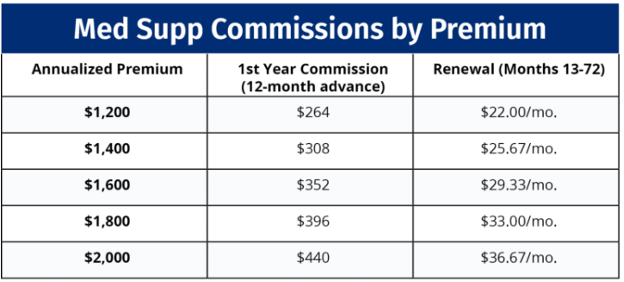
Example using 22% commission and 12-month advance:

For agents selling Medicare Supplement plans, commissions remain a steady and reliable income source. While initial-year payouts may be lower than Medicare Advantage, the ongoing renewal structure provides financial stability.

Join the team at Crowe- click here for online contract

Please note: These payment amounts vary by carrier and product. Not all carriers pay 22% for enrollments. This amount varies quite a bit. Be sure you check each carrier’s rate in the specific area you plan to market the plans in.

What is a formulary exception

What is a Formulary Exception

By Ed Crowe | General Articles | 0 comment | 9 February, 2025 | 0

Anyone enrolled in a Medicare Prescription Drug Plan (PDP) or a Medicare Advantage plan with drug coverage (MAPD), you may occasionally find that a medication prescribed by Their doctor is not covered by their drug plan. This is where a formulary exception can help. Right now you may be asking; what is a formulary exception?

A formulary exception is a formal request asking your Medicare drug plan to cover a medication that is not on its formulary (list of covered drugs) or to waive certain coverage restrictions. Here’s what you need to know about how formulary exceptions work and how to request one.

When do you need a Formulary Exception

We list below a few reasons why a Medicare beneficiary might need a formulary exception:

This is a common reason; the prescribed medication is not on the enrollee’s plan formulary. In other words, it isn’t covered. If the doctor believes it’s medically necessary, the enrollee can request an exception.

Some plans require enrollees to try lower-cost drugs (step-therapy)before covering a more expensive one. If the alternatives are ineffective or cause harm, the enrollee can request an exception.

In some cases, a plan may impose quantity limits on the medication beneficiaries receive within a specific time frame. If the doctor prescribes a larger amount than the drug plan covers, the beneficiary needs an exception.

If the necessary medication is on a higher-cost tier, beneficiaries can request a lower copay by asking the insurer to move it to a lower tier. This is referred to as a tier exception and it does not apply to specialty-tier drugs.

How to request a Formulary Exception

  1. The beneficiary should talk to their doctor to explain the situation. The doctor must provide a medical reason that the drug is necessary and why a lower cost alternative is not effective.
  2. The next step is to submit a formal request. The beneficiary must contact the drug plan and request a coverage determination. They should follow the official request process as explained by their plan provider and include supporting documents from their doctor.
  3. Once these steps are completed, the beneficiary waits for a decision. They should receive this within 72 hours of the request. If the enrollees health is at risk, they may request an expedited decision (within 24 hours).
  4. If the request is denied, the enrollee has the right to file an appeal. This process provides multiple channels for the beneficiary if they feel it is necessary.

Important takeaways

A formulary exception helps beneficiaries get coverage for medications that drug plans do not typically cover. Their doctor must provide medical justification for the request. In the event that the plan denies the request, the beneficiary can appeal the decision.

Watch a YouTube video on the $2,000 drug cap

Understanding formulary exceptions can help ensure beneficiaries receive needed medications and avoid unnecessary health risks.

What is the Medicare GEP

What is the Medicare GEP

By Ed Crowe | General Articles | 0 comment | 6 February, 2025 | 0

To answer the question; what is the Medicare GEP; The Medicare GEP is an opportunity for individuals who missed their initial chance to sign up for Medicare Part A and/or Part B to enroll. It runs from January 1 to March 31 each year. This allows eligible individuals to enroll in Medicare coverage, though late penalties may apply.

Who needs the GEP

The GEP is for individuals who did not sign up for Medicare during their IEP (Initial Enrollment Period) and do not qualify for an SEP (Special Enrollment Period).

When does coverage begin

As of 2023, individuals who enroll in Medicare during the GEP will have their coverage begin the month after they enroll. Prior to 2023, coverage did not begin until July 1, which led to significant delays in accessing benefits.

Late enrollment penalties

Individuals who sign up during the GEP may have to pay an LEP (late enrollment penalty). This can increase monthly Medicare costs:

Part A penalty

For those who must pay a premium for Part A, the monthly premium could increase by 10%. This will be in place for twice the number of years they were eligible but didn’t sign up.

Part B Penalty

The monthly Part B premium will increase by 10% for each full 12-month period the beneficiary was eligible but didn’t enroll. This penalty is permanent and remains in place for as long as they have Part B.

Medicare Advantage, Part D and Supplement enrollment

If an individual enrolls in Medicare during the GEP, they can sign up for a Medicare Advantage (Part C) or a Medicare Part D prescription drug plan at this time. Coverage for these plans begins on the month following the enrollment. Although late enrollment in Part D or Medicare Advantage plans that include prescription drug coverage may include a lifelong penalty.

Medicare supplements can be a little more difficult to get after the individual’s Medigap open enrollment has passed. When this is the case, some states require enrollees to undergo underwriting which can lead to denial or higher premiums.

Avoiding the need for the GEP

Beneficiaries can avoid using the GEP (General Enrollment Period) and getting potential LEPs:

Sign up for Medicare during the Initial Enrollment Period, which starts three months before the 65th birthday and ends three months after.

Those who have employer-sponsored coverage should confirm whether they qualify for a Special Enrollment Period (SEP) when that coverage ends. If they do, be sure to enroll before the SEP ends.

The Medicare GEP is an important opportunity for those who miss their initial chance to enroll in Medicare. However, because of potential late penalties and delays in coverage, it’s best to sign up during the Initial Enrollment Period or a Special Enrollment Period when possible. Understanding enrollment deadlines helps ensure that beneficiaries get the healthcare coverage they need and avoid unnecessary costs.

Medicare Wellness visits vs checkups

Medicare Wellness Visits vs Checkups

By Ed Crowe | General Articles | 0 comment | 5 February, 2025 | 0

If you’re a Medicare agent, you may receive calls from clients asking if Medicare covers their annual checkup. Most likely, your answer will confuse them. Many do not understand the difference between Medicare wellness visits vs checkups. Some people use these terms interchangeably. However, these are actually two different types of appointments. Understanding the distinction can help beneficiaries make the most of their Medicare benefits.

What is an annual wellness visit

An annual wellness visit is a preventive service that Medicare Part B covers. This visit helps beneficiaries and their providers create or update a personalized prevention plan based on current health and risk factors.

During this visit, the doctor reviews the beneficiary’s medical history, medications, height, weight, and blood pressure. They also assess cognitive function and risk factors for conditions like dementia. The beneficiary receives personalized health advice and screenings. The doctor and beneficiary may use this visit to discuss advance care planning and develop or update a prevention plan.

Medicare covers 100% of the cost for an annual wellness visit. In other words, there is no copay or deductible if your provider accepts Medicare assignment.

What is an annual checkup

An Annual Checkup (Routine Physical Exam) is a comprehensive medical evaluation that goes beyond the preventive focus of an annual wellness visit. Unlike the annual wellness visit, Medicare does not cover routine physicals. Those who request an annual checkup, may pay out of pocket unless they have insurance that covers it. During an annual checkup, the doctor may perform a physical exam, listen to the heart and lungs as well as order lab tests such as blood work. The provider assess overall organ function and diagnose medical issues.

Because an annual checkup involves diagnostic and treatment-related services, Medicare does not cover this visit unless it is used to address health concerns under medical necessity.

Why this matters for Medicare beneficiaries

Many Medicare beneficiaries schedule an “annual physical” expecting it to be fully covered, only to find out later that Medicare does not pay for it.

In order to avoid unexpected costs; beneficiaries who want a preventive visit covered by Medicare should ask for an “annual wellness visit.”

Click here to learn more about Medicare annual wellness visits


Anyone who needs a full physical exam including diagnostic tests, or lab work should check on the potential costs.

Understanding the difference between these visits ensures beneficiaries receive needed care and helps them avoid unexpected medical bills.

Medicare Permission to Contact Rules

Medicare Permission to Contact Rules

By Ed Crowe | General Articles | 0 comment | 3 February, 2025 | 0

Before an agent can contact a potential client, they must be aware of the Medicare permission to contact rules. CMS puts these rules in place to protect Medicare beneficiaries.

Permission to Contact

Before we go over the permission to contact rules, we will explain what PTC (permission to contact) is. The PYTC guidelines were put in place to protect Medicare beneficiaries from receiving unsolicited communications and high pressure sales tactics. Any agent who wants to contact a potential client must follow all CMS marketing and communications guidelines.

For an agent to receive permission to contact in a complaint way, the potential client must initiate contact. In other words, the potential client must grant permission for the agent to contact them before the agent can do so.

Please note; agents do not need a PTC to contact their current Medicare clients.

Watch a YouTube video on Medicare marketing rules

Click here for a quick updated one-to-one consent rule video

When you need PTC

When an agent wants to speak with a potential Medicare client, they must have PTC. This is important especially if you plan to discuss either Medicare Advantage or PDP plans. Keep in mind; if you discuss Medicare Supplement plans, you will probably discuss PDP plans as well.  Even though CMS rules do not apply to Medicare Supplements, the TCPA guidelines do apply. That is why, it is important to get PTC whenever you plan to contact a potential client for any sales meeting.

Please note; you do not need a PTC to send out unsolicited emails to potential clients. All emails must contain an option to opt-out and the email must not contain information that would classify it as marketing material. That is anything with specific benefits or plan information that could sway a potential client towards a specific plan choice. All email communications must follow the CAN SPAM Act laws.

How to collect a Medicare Permission to contact

What you can do:

  1. Always keep business cards with your contact information available for events you attend or just in case a potential client needs one. That makes it easy for people to contact you. Additionally; current clients may want a couple cards to give friends or family if they need an agent.
  2. If you have a website, make sure there is a contact form on it so clients can request that you contact them.
  3. When you send out emails, be sure to include your contact information as well as a contact form if they want more information or assistance.
  4. Business reply cards are also a way to obtain PTC. If the prospect wants more information, they just fill out the card and send it back to you.

What you can’t do:

  1. Agents are not permitted to go door-to-door looking for clients. If you do not have a scheduled appointment, you cannot go to someone’s home.
  2. Do not send a direct message to a prospect through any social media platform.
  3. Never cold call prospects to sell either a Medicare Advantage or PDP plan.
  4. Do not contact a friend or relative of a current client without their consent. Each person must provide PTC.

After you have the PTC, it is good for up to 12 months. If you have not contacted the prospect within that time frame, you will need another PTC before attempting to contact them.

Permission to Contact and Scope of Appointment differences

Although both the SOA and the PTC serve a similar purposes, there are some important differences. Each protects Medicare beneficiaries from unfair sales practices. You need to have PTC before you contact the prospect and then you can collect a SOA.

The SOA is a form that specifies which healthcare products the beneficiary wants to discuss during their appointment with the agent. Learn more about SOAs.

If you are ready to join the team at Crowe, click here for online contracting

12

Categories

  • Ancillary Health product sales
  • Annuities
  • annuity
  • Brokers
  • CD rates
  • Dental
  • Dental insurance
  • Disability
  • FDIC insured CDs
  • Fixed interest rates
  • General Articles
  • Group Health Insurance
  • Individual Health Insurance
  • Investments
  • Latest news
  • Life Insurance
  • Life Insurance Products
  • Long Term Care
  • Medicare
  • Medicare A and B benefits
  • Medicare Advantage Plans
  • Medicare compliance
  • Medicare Drug Coverage
  • Medicare Supplements
  • Over The Counter benefits
  • phone and home Medicare sales
  • Retirement Income
  • Voluntary Benefits

Recent Comments

  • Priscilla Sharp on UnitedHealthcare UCard Benefits 2026
  • John Matzel on Humana OTC catalog 2024
  • Di on UnitedHealthcare UCard Benefits 2026
  • Ed Crowe on Protecting Medicare Consumers And Agents
  • Patricia Brill-Piscitelli on Protecting Medicare Consumers And Agents

Social Icons

Archives

  • March 2026
  • February 2026
  • January 2026
  • December 2025
  • November 2025
  • October 2025
  • September 2025
  • August 2025
  • July 2025
  • June 2025
  • May 2025
  • April 2025
  • March 2025
  • February 2025
  • January 2025
  • December 2024
  • November 2024
  • October 2024
  • August 2024
  • July 2024
  • June 2024
  • May 2024
  • April 2024
  • March 2024
  • February 2024
  • January 2024
  • December 2023
  • November 2023
  • October 2023
  • September 2023
  • August 2023
  • July 2023
  • June 2023
  • May 2023
  • April 2023
  • March 2023
  • February 2023
  • January 2023
  • December 2022
  • October 2022
  • September 2022
  • August 2022
  • July 2022
  • June 2022
  • February 2022
  • December 2021
  • October 2021
  • February 2021
  • January 2021
  • February 2020
  • January 2020
  • October 2019
  • July 2019
  • June 2019
  • May 2019
  • April 2019
  • March 2019
  • February 2019
  • January 2019
  • October 2018
  • September 2018
  • August 2018
  • July 2018
  • April 2018
  • March 2018
  • February 2018
  • January 2018
  • December 2017
  • November 2017
  • September 2017
  • August 2017
  • July 2017
  • June 2017
  • May 2017
  • April 2017
  • March 2017
  • February 2017
  • January 2017
  • December 2016
  • July 2016
  • June 2016
  • May 2016
  • April 2016
  • March 2016
  • February 2016
  • January 2016
  • September 2015
  • August 2015
  • July 2015
  • June 2015
  • May 2015
  • March 2015
  • February 2015
  • September 2014
  • August 2014
  • May 2014
  • April 2014
  • March 2014
  • February 2014
  • January 2014
  • September 2013
  • August 2013
  • July 2013
  • June 2013
  • May 2013
  • April 2013
  • March 2013
  • February 2013
  • January 2013
  • December 2012
  • November 2012
  • October 2012
  • September 2012
  • August 2012
  • July 2012
  • June 2012
  • May 2012
  • April 2012
  • March 2012
  • February 2012
  • July 2011
  • June 2011
  • August 2010
  • April 2010
  • September 2009
  • August 2009

Recent Posts

  • Solis Medicare Advantage Plans
    2 March, 2026
    0

    Solis Medicare Advantage Plans

  • Why Offer Ameritas Dental Plans
    16 February, 2026
    0

    Why Offer Ameritas Dental Plans

  • The Value of Essential Engine
    3 February, 2026
    0

    The Value of Essential Engine

  • Why use Allcalls.io
    26 January, 2026
    0

    Why Use Allcalls.io

With licensed sales professionals in both the investment and insurance fields, the experienced and knowledgeable team at Crowe & Associates can tend to your various needs.

Latest News

  • Solis Medicare Advantage Plans

    Solis Medicare Advantage Plans

    Solis Medicare Advantage Plans: Comprehensive Coverage for Every Beneficiary Solis Health Plans

    2 March, 2026

For agent use only.

We do not offer every plan available in your area. Any information we provide is limited to those plans we do offer in your area. Please contact Medicare.gov or 1-800 MEDICARE to get information on all options.

Not affiliated with the U. S. government or federal Medicare program. This website is designed to provide general information on Insurance products, including Annuities. It is not, however, intended to provide specific legal or tax advice and cannot be used to avoid tax penalties or to promote, market, or recommend any tax plan or arrangement. Please note that [Agency Name], its affiliated companies, and their representatives and employees do not give legal or tax advice. Encourage your clients to consult their tax advisor or attorney.

Follow Us

  • Follow Us on LinkedIn
  • Find Us on Facebook
  • Watch Us on YouTube

Subscribe to our newsletter

Edward K. Crowe & Associates LLC BBB Business Review
  • Home
  • About
  • Agents
  • Quote
  • Retirement
  • Services
  • Blog
  • Contact
  • Privacy Policy
Copyright 2026 Crowe & Associates | All Rights Reserved |

Insurance Agency Website by Stratosphere

  • Home
  • ABOUT
  • Sales Blog
  • Sales Tools
    • Online enrollment
      • Connect4Medicare
      • Sunfire
    • Quote and comparison site
    • Application Processing
    • Free Medicare lead program
    • Agent website
    • Predictive dialer
  • Free Leads
  • Products
    • Medicare Plans
    • Life Insurance Plans
    • Final Expense Insurance
    • Long Term Care Insurance
    • Fixed and Indexed Annuities
    • Healthshares
    • Dental and Vision Plans
    • Other Products
  • Training Webinars
  • Contact Us
Crowe & AssociatesCrowe & Associates

Online Enrollment- Enroll prospects online without the need for a face to face appointment. Access to all major carriers with the ability to compare plan benefits and prescription drug costs. Link to recorded webinar https://attendee.gotowebinar.com/recording/2899290519088332033

All agents receive a personalized enrollment website. Prospects can use the site to compare plans, check doctors, run drug comparisons and enroll in plans. Agents are credited for all enrollments. Click Here

Error: Contact form not found.